To add Namecheap DNS records, sign in, open Domain List → Manage → Advanced DNS, then choose Add New Record under Host Records. Select the required type, enter its host and value, choose the TTL, and save.
That route applies to domains using Namecheap BasicDNS, FreeDNS or PremiumDNS. If your domain uses hosting nameservers or a third-party DNS provider, its live records are managed elsewhere. We start with that check so you do not spend time editing an inactive zone.
Check where your domain’s DNS is managed
Open Domain List in your Namecheap account and select Manage next to the domain. On the Domain tab, inspect the Nameservers section. It tells you whether the domain uses Namecheap’s DNS service, its hosting nameservers or custom nameservers.
Namecheap’s official instructions state that Advanced DNS host-record controls are available for BasicDNS, FreeDNS and PremiumDNS. Domains pointed to its hosting nameservers use cPanel instead. If your DNS is with another provider, sign in to that provider to make the record change.
Do not change nameservers merely because you cannot see Add New Record. First identify the current DNS service and existing website and mail settings. For the hosting route, use our cPanel DNS guide; for the terminology, see what a nameserver is.
Need the domain first?
Runs the same live check as the front page. If it is taken we will show you when it expires.
Gather the values before opening the editor
Use the instructions from the service you are connecting. A website host, email provider and domain-verification service may request different records for the same domain. Keep the record type, host, value, TTL and any priority together rather than copying only the destination.
Make a note of the existing row before changing it. A simple backup should include the exact host, type, value and TTL. That gives you a defined rollback if the new entry points to the wrong service. Do not delete unrelated records as part of a routine website connection.
- A: associates a hostname with an IPv4 address.
- AAAA: associates a hostname with an IPv6 address.
- CNAME: associates one hostname with another hostname.
- TXT: stores text requested for verification or email authentication.
- MX: identifies mail routing; follow Namecheap’s mail-specific setup rather than treating it as a website address.
Our DNS record reference explains the differences. The provider’s required type matters: a hostname is not a valid replacement for an IPv4 address in an A record.

Add a record in Namecheap Advanced DNS
- Sign in. Open your Namecheap account and complete authentication.
- Select Domain List. Find the correct domain in the list.
- Choose Manage. Open that domain’s management page.
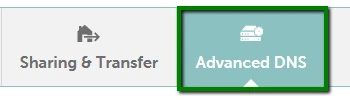
- Open Advanced DNS. Find the Host Records section. If it is unavailable, return to the nameserver check instead of guessing another panel.
- Choose Add New Record. Select the type requested by your service, such as A Record, CNAME Record or TXT Record.
- Enter the Host. Use
@for the bare domain. For a subdomain such aswww.example.com, enter onlywww, not the complete domain. - Enter the value. Supply the IP address, hostname or text required for that record type. Do not add a website path to an address record.
- Set the TTL. Use the service’s requested setting, or leave the available Automatic choice when no different setting is required.
- Save the row. Use the green checkmark/save control for the entry, then review the saved record.
As an illustrative example, a CNAME for www.example.com uses www in Host and the destination hostname supplied by your website service in Value. Do not copy an example destination unless it is actually the one your provider assigned.
Common Host and Value mistakes
Repeating the domain in Host: Namecheap’s Host field expects @ for the root or the subdomain label for a subdomain. Entering the full domain where only a label is expected can produce the wrong name.
Using a URL instead of a record value: an A record expects an IPv4 address, not https://example.com/page/. A CNAME expects a hostname. DNS does not choose a website’s page path.
Putting CNAME at the root: Namecheap warns against using CNAME for @ because it can affect MX records and email. If your website service requests a root-domain alias, follow its documented Namecheap-compatible method instead of copying the www record to the root.
Confusing a record change with a redirect: pointing a hostname at a server does not itself tell that server to redirect visitors to another URL. Treat DNS setup and HTTP forwarding as separate tasks.
What TTL means after you save
TTL controls how long DNS resolvers can retain a cached answer. Namecheap documents its usual default as 30 minutes, with a different default for ALIAS records. The editor also offers Automatic. Those settings are not a guarantee that every possible DNS change finishes within the same time.
If an old answer is still cached, saving the new row again does not clear that remote cache. First confirm that the authoritative provider has the intended record. Then compare the exact hostname and type being queried, and allow the previous answer’s TTL to expire.
For a fuller explanation, read how DNS lookups work. Our domain lookup tool helps with registration context; it is not a substitute for checking the actual DNS record.
Editing, removing and undoing changes
For an existing entry, edit the intended row rather than adding an accidental duplicate. Recheck its Host, type and current value, make the change and save. If an entry is no longer needed, remove only that specific row after confirming that no active service depends on it.
If something stops working, restore the previous values from your notes. A rollback is also a DNS change and remains subject to caching. Avoid changing nameservers, website records and email records simultaneously: separate changes are easier to verify and reverse.
Common questions
Why can’t I find Host Records?
The usual first check is the nameserver setting. Namecheap directs domains using hosting DNS to cPanel and domains using third-party DNS to that provider’s editor. An unavailable Advanced DNS editor does not by itself mean your domain is broken.
Does buying hosting automatically choose the correct DNS?
Do not assume it does. Inspect the domain’s current nameservers, then make the required records in the active zone. The hosting account and domain-registration account are related services, not interchangeable DNS editors.
Can adding a website record break email?
A correctly scoped website change should leave unrelated mail settings intact, but deleting MX/TXT entries or using an unsuitable root CNAME can disrupt email. Keep those records unless your email provider explicitly instructs otherwise.